
Why 5G Still Feels Overhyped in India
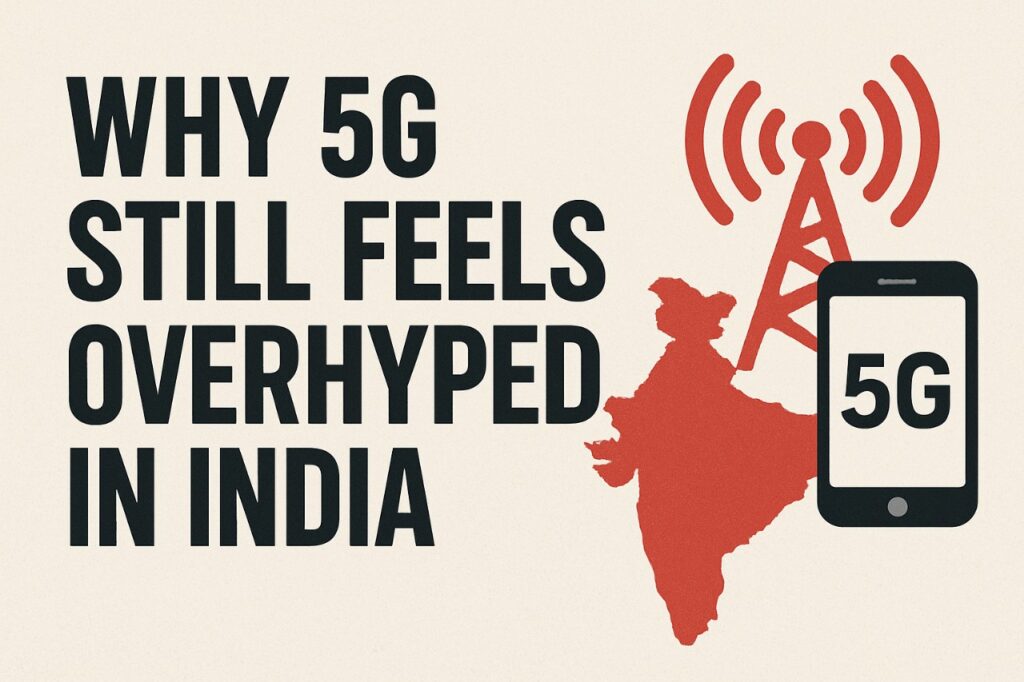
For years, telecom brands have promised that 5G in India would change everything — instant downloads, flawless streaming, smart cities, and futuristic connectivity. Yet in 2025, the reality is subtler. Most users feel only incremental differences, while the hype around 5G towers above actual experience.
Some regions enjoy occasional bursts of high-speed data, but many others barely notice a difference from 4G. Latency improvements are real, but applications that truly leverage them are scarce. This short read breaks down why 5G in India isn’t the revolution it’s marketed as, the infrastructural and cultural reasons behind it, and what consumers should realistically expect.
⚙️ Core Insight (Depth + Clarity)
The excitement around 5G in India is driven by expectation more than experience.
Telecom brands advertise ultra-fast speeds and low latency, but several factors limit the tangible benefits:
- Infrastructure Lag – 5G requires dense network deployment. Towers, small cells, and spectrum allocation are still incomplete in most cities and rural areas.
- Device Constraints – Many 5G-capable smartphones exist, but their performance often bottlenecks due to mid-range chipsets, limited antennas, or older modems.
- Application Gap – True 5G advantages like cloud gaming, AR/VR streaming, and industrial IoT haven’t scaled yet. For most users, streaming HD video or browsing social media looks similar to 4G.
The simple truth: 5G in India is real, but its current impact is mostly incremental. The promise is futuristic; the reality remains practical, often underwhelming.
📊Bite-Sized Data Table
| Factor (2025) | Real Impact | Observed Effect in India |
|---|---|---|
| Coverage Density | Medium | Urban clusters see fast speeds; suburbs lag |
| Device Capabilities | High | Mid-range phones limit full 5G potential |
| Network Latency | Low | Minor improvement over 4G for most users |
| AR/VR & Cloud Gaming | Low | Few apps truly exploit 5G speed |
| Spectrum Allocation | Medium | Fragmented frequencies slow rollout |
🔍 Micro Analysis
A: The Real-World Impact
For daily users, 5G in India manifests in subtle ways:
- Faster downloads occasionally – Large files or app updates can complete in seconds.
- Stable streaming in urban hotspots – 4K video is smoother, buffering is rare.
- Gaming and cloud apps – Limited to premium devices or certain regions; many casual gamers see no difference.
- Battery drain – 5G radios consume more power, sometimes offsetting speed gains.
In essence, average consumers experience small wins, but nothing transformative — yet the marketing paints 5G as revolutionary.
B: The Hidden Truth
The hype around 5G in India is strategic:
- Telecoms push 5G to drive subscriptions and justify higher plans.
- Regulatory delays and spectrum fragmentation slow uniform rollout.
- Many apps and services that benefit from 5G are region-specific or subscription-based.
- Device makers emphasize 5G as a selling point, even if the average user rarely taps its full potential.
- Infrastructure investment is expensive; marketing hype keeps momentum while networks expand slowly.
The engineering reality: 5G works, but its real impact depends on software, ecosystem adoption, and consistent network coverage — all still works in progress in India.
🌍 Culture Angle
Indian users are pragmatic. Connectivity matters, but affordability, battery life, and real-world reliability often outweigh theoretical maximum speeds.
- Urban tech enthusiasts adopt 5G phones quickly, chasing status and perceived future-proofing.
- Rural and suburban users prioritize coverage and device cost over “ultra-fast” promises.
- Social media, streaming, and cloud gaming remain aspirational for most households.
The culture reflects a growing gap between marketing promise and practical usage. Consumers increasingly scrutinize claims, distinguishing between “real speed” and “hype speed.”
🧠 Quick Vibetric Takeaway
- 5G in India is real but mostly incremental for average users.
- Network density, spectrum fragmentation, and device constraints limit impact.
- True 5G use cases like AR/VR, cloud gaming, and smart-city applications remain niche.
- Marketing amplifies perception, not everyday experience.
- Urban enthusiasts benefit more than rural users; coverage inequality persists.
- Battery and device limitations can negate speed gains.
- The revolution is coming, but patience is required — 5G is a slow-burn, not an instant leap.
💬 Vibetric Verdict
Vibetric Verdict: 5G isn’t a failure — it’s a promise unfolding.
In India, it currently enhances speed subtly, stabilizes streaming, and teases future possibilities.
The hype overshadows incremental wins, but for those who look beyond marketing, the potential is clear.
The real revolution will come when devices, networks, and apps synchronize.
Until then, 5G is less spectacle, more quietly improving foundation.
🔗 Stay in the Loop
We don’t sell hype — we explain it.
- Follow @vibetric_official for cgrounded insights on telecom trends, real-world testing, and honest analysis.
- Bookmark vibetric.com to stay ahead of the tech curve.
- No hype. No bias. Just facts — the Vibetric way.
💬 What’s your take on this?
The comment section at Vibetric isn’t just for reactions — it’s where creators, thinkers, and curious minds exchange ideas that shape how we see tech’s future.
Windows AI PCs 2026 — The Powerful Shift Toward Intelligent Computing
Windows AI PCs 2026 — The Powerful Shift Toward Intelligent Computing For years, PC upgrades were measured through familiar metrics—faster processors, better
Compact Earbuds Technology 2026 — The Powerful Shift Toward Smaller, Smarter Audio
Compact Earbuds Technology 2026 — The Powerful Shift Toward Smaller, Smarter Audio Minimalism in audio design used to mean compromise. Smaller shells