
Is a 144Hz Monitor Still Enough for Competitive Gaming?

For years, 144Hz gaming monitors have been considered the baseline for competitive esports. They promised smoother motion, reduced input lag, and a tangible advantage over 60Hz screens. In 2025, higher refresh-rate monitors—240Hz, 360Hz, and beyond—are widely available. This raises the question: is a 144Hz gaming monitor still sufficient for serious play, or has it become outdated?
Understanding Refresh Rate Impact
A monitor’s refresh rate dictates how many frames per second it can display. Higher refresh rates allow smoother motion and better visual clarity in fast-paced games. Competitive shooters and MOBAs benefit from higher refresh rates by improving reaction times and reducing motion blur.
144Hz monitors remain a substantial upgrade over 60Hz and 75Hz displays. The difference between 144Hz and higher-end 240Hz or 360Hz monitors exists, but it is often subtle for most players. True gains depend on the player’s skill level, frame rates achieved by the GPU, and game optimization.
Popular Monitor Examples in 2025
To help visualize current options:
- 144Hz Monitors:
- ASUS TUF Gaming VG27AQ2
- Dell S2723DGF
- LG UltraGear 27GN800
- 240Hz Option:
- Samsung Odyssey G5 27″ 240Hz
These monitors provide smooth motion for competitive gaming, with 144Hz models offering excellent value for casual and semi-pro players, while the 240Hz model targets high-end competitive scenarios.
Visual Perception vs Practical Advantage
Professional gamers may notice micro-improvements in higher refresh rates, such as reduced motion blur in rapid flicks or better tracking of moving targets. For casual and semi-pro players, 144Hz remains highly responsive, offering a balance between smoothness and cost-efficiency.
Pro Player Callout: Ultra-high refresh rates (240Hz–360Hz) can provide subtle advantages in fast-paced FPS titles but require high-frame-rate GPUs and precise setups.
Casual Player Callout: 144Hz monitors are more than sufficient for everyday competitive play, offering smooth visuals and responsive controls without overspending.
The law of diminishing returns applies: beyond 144Hz, perceptible improvements require precise setups, high frame-rate GPUs, and controlled lighting conditions. Without these, investing in ultra-high refresh rates offers limited practical advantage.
Hardware Synergy Matters More
A 144Hz gaming monitor’s effectiveness depends on the overall system. High refresh rates only matter if the GPU can consistently deliver matching frame rates. Even the best 360Hz monitor underperforms if the system cannot push 300+ FPS.
Other factors like low input lag, response time, and adaptive sync technologies (G-Sync, FreeSync) often contribute more to competitive performance than raw refresh rate alone. A well-calibrated 144Hz monitor with low latency and adaptive sync can outperform a higher-refresh-rate monitor with poor system synergy.
Cost, Accessibility, and Real-World Usage
144Hz gaming monitors have become widely affordable and accessible, making them a practical choice for most competitive gamers. Higher-tier 240Hz and 360Hz displays often cost significantly more, and achieving full utilization requires powerful GPUs, which further increases investment.
For gamers balancing budget with performance, 144Hz monitors continue to provide excellent competitive value, particularly when paired with optimized system hardware and ergonomic setups.
Contrarian Perspective: When Higher Refresh Rates Matter
While 144Hz suffices for most players, professional esports athletes or high-end competitive enthusiasts may benefit from 240Hz or 360Hz displays. In titles like CS:GO, Valorant, or Apex Legends, the tiny improvements in motion clarity and input response can be decisive. However, for the majority of players, a 144Hz gaming monitor delivers ample performance without overcomplicating setup or budget.
Closing Insight
A 144Hz gaming monitor remains a strong, practical choice for competitive gaming in 2025. It balances performance, affordability, and accessibility while offering a perceptible advantage over standard 60Hz displays. Ultra-high refresh rates provide incremental gains, but their benefits are often limited to professional or highly skilled players. Choosing the right monitor should consider system synergy, game type, skill level, and budget to maximize value.
Keep Gaming Smart with Vibetric
- Follow our Instagram @vibetric_official for detailed analysis of gaming peripherals and monitor performance.
- Bookmark vibetric.com to compare refresh rates, response times, and real-world usability.
- Stay updated on reviews that highlight tangible advantages beyond marketing specifications.
What’s your take on this?
At Vibetric, the comments go way beyond quick reactions — they’re where creators, innovators, and curious minds spark conversations that push tech’s future forward.
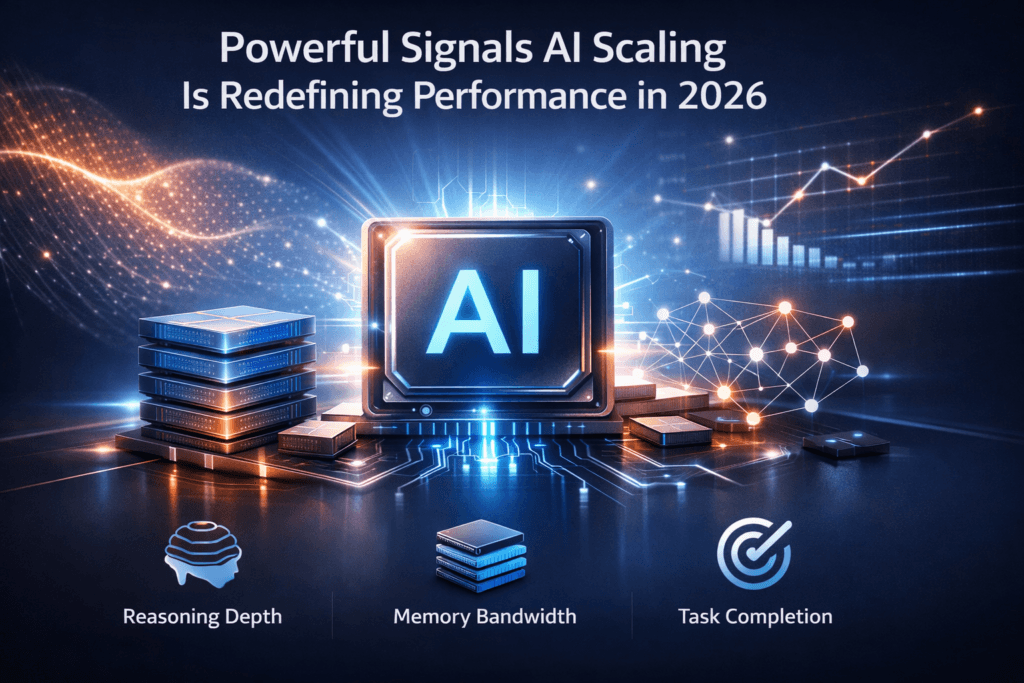
Powerful Signals AI Scaling Is Redefining Performance in 2026
Powerful Signals AI Scaling Is Redefining Performance in 2026 The hardware race that defined consumer tech for thirty years is decelerating. A
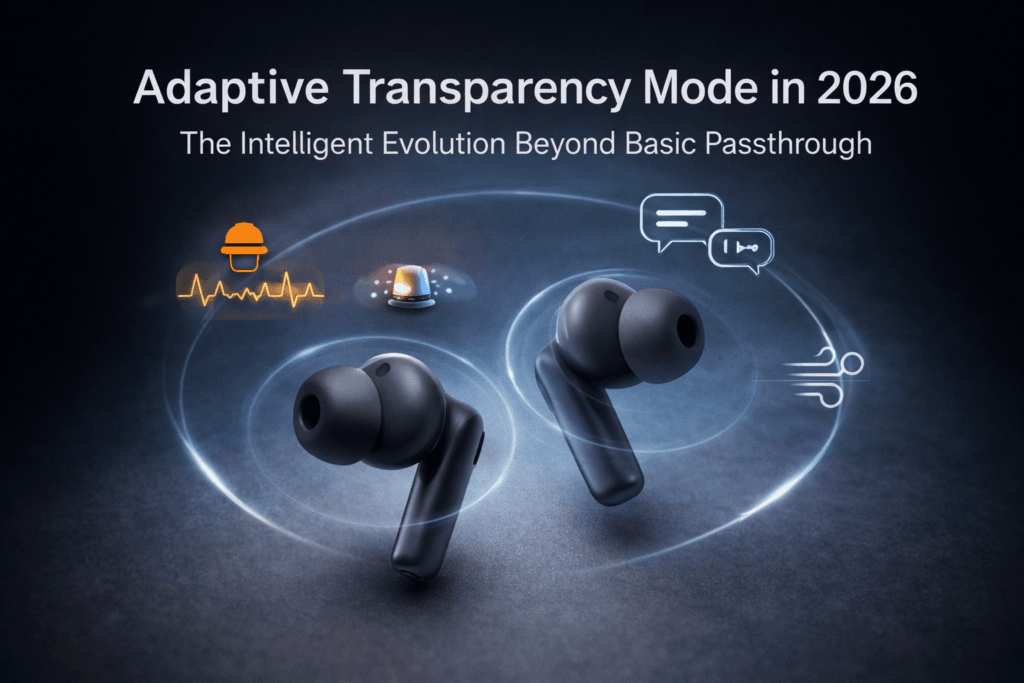
Adaptive Transparency Mode in 2026: The Intelligent Evolution Beyond Basic Passthrough
Adaptive Transparency Mode in 2026: The Intelligent Evolution Beyond Basic Passthrough Noise cancellation used to be the headline feature. Transparency was the